




How to Check RERA Registration Before Buying a Flat: Complete Guide

A simple guide for every home buyer | Updated November 2026
Many families pay for a flat and then wait years for the keys. You can avoid this with one simple step: check the project’s RERA registration before you pay anything.
This guide explains what RERA is, why it matters and how to check it online in a few minutes. If you are looking at flats in the Tricity (Chandigarh, Mohali, Panchkula and Zirakpur), this guide is a good starting point. Every step is in simple words, so anyone can follow along.
What Is RERA and Why Does It Matter?
RERA is a law made to protect home buyers. It makes builders more honest and the buying process clearer. Think of it as a seat belt. You do not need it every day, but it protects you when something goes wrong.
Full Form and Meaning of RERA
RERA stands for the Real Estate (Regulation and Development) Act. Parliament passed it in 2016 to bring order to the property market.
Before this law, many builders made big promises with little proof. Buyers had few ways to complain or get their money back.
Every State Has Its Own RERA Authority
The law is national, but each state or union territory runs its own RERA authority and website. A project in Punjab is checked on a different portal from a project in Maharashtra.
Many buyers search on the wrong website and get confused. Always use the portal of the state where the flat is located.
Why You Should Check RERA Registration Before Buying a Flat
A RERA number works like an identity card for a project. It shows that the builder has shared real details with the government and agreed to follow the rules.
You Get the Real Facts
A registered builder must upload the land status, the plan, the approvals and the expected delivery date. You can read all of this for free before you decide. You do not have to rely on a shiny brochure or a salesperson’s words.
Your Money Is Safer
The law says a builder must keep 70 percent of the money collected from buyers in a separate bank account. This money can be used only for the same project. So your payment cannot easily be moved to another project or to personal use.
You Can Claim Compensation for Delay
If a registered builder fails to hand over your flat on the promised date, you can ask for a refund with interest. If you choose to stay in the project, you can ask for monthly interest on the amount you paid. These rights exist because the project is under the law.
You Get Clear Area Details
Under RERA, a flat must be sold on carpet area. This is the usable floor area inside the flat, including the space taken by internal walls. It does not include the balcony or common areas. This ends the old practice of selling on super built-up area, which looked big on paper but felt small in real life.
Which Projects Need RERA Registration?
A project must be registered if the land is more than 500 square metres or if it has more than eight apartments. In simple words, almost every normal residential project needs a RERA number.
Smaller buildings below these limits may be exempt. It is still wise to ask the builder for details. Projects that already had a completion or occupancy certificate before the law started also did not need to register.
If you are shortlisting homes in the Tricity, you can start with these lists of RERA approved projects in Mohali and RERA approved projects in Zirakpur. Even then, verify each project yourself using the steps below.
What to Keep Ready Before You Start
A little preparation makes the check quick. You will need:
- The exact name of the project and the builder
- The RERA registration number, if the builder has shared it
- The city and state of the project
- A phone or computer with internet
If the builder has not given you the RERA number, ask for it politely. A genuine builder will share it at once. It is also printed on legal advertisements and brochures.
How to Check RERA Registration Online: Step by Step
The whole process takes about five to ten minutes.
Step 1: Find Your State’s Official RERA Website
Search for your state’s name followed by “RERA official website”. Look for an address ending in gov.in or nic.in, because these are government domains.
Avoid sites that only look official or ask for money or personal details. A real RERA portal never charges you to view project details.
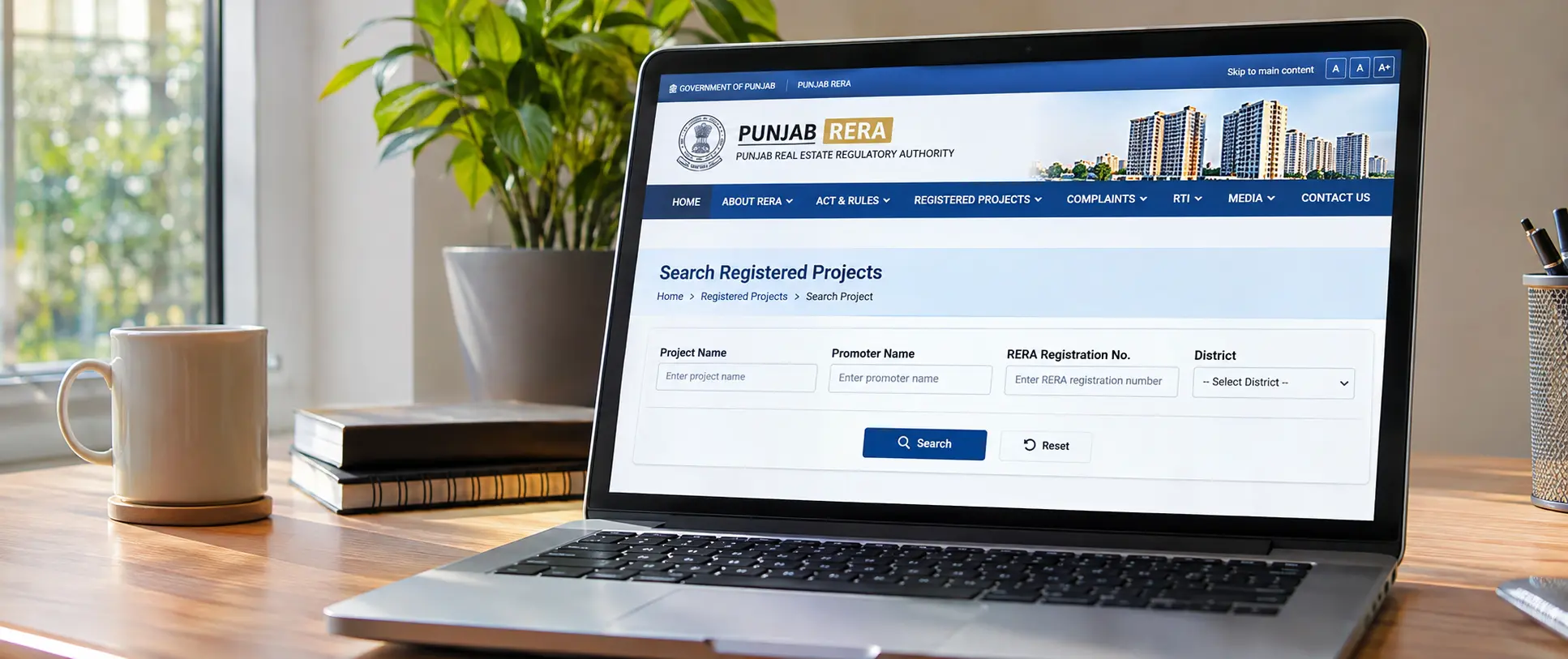
Step 2: Open the Registered Projects Section
Most portals have a menu item called Registered Projects, Project Search or Search Project. Click it and a search page will open. Some portals also list projects that are not registered or have been removed. Check that list too when it is available.
Step 3: Enter the RERA Number or Project Name
The fastest way is to type the RERA number exactly as written in the brochure. If you do not have it, search by project name, builder name or district. Some portals ask you to solve a small captcha first.
Step 4: Match the Details
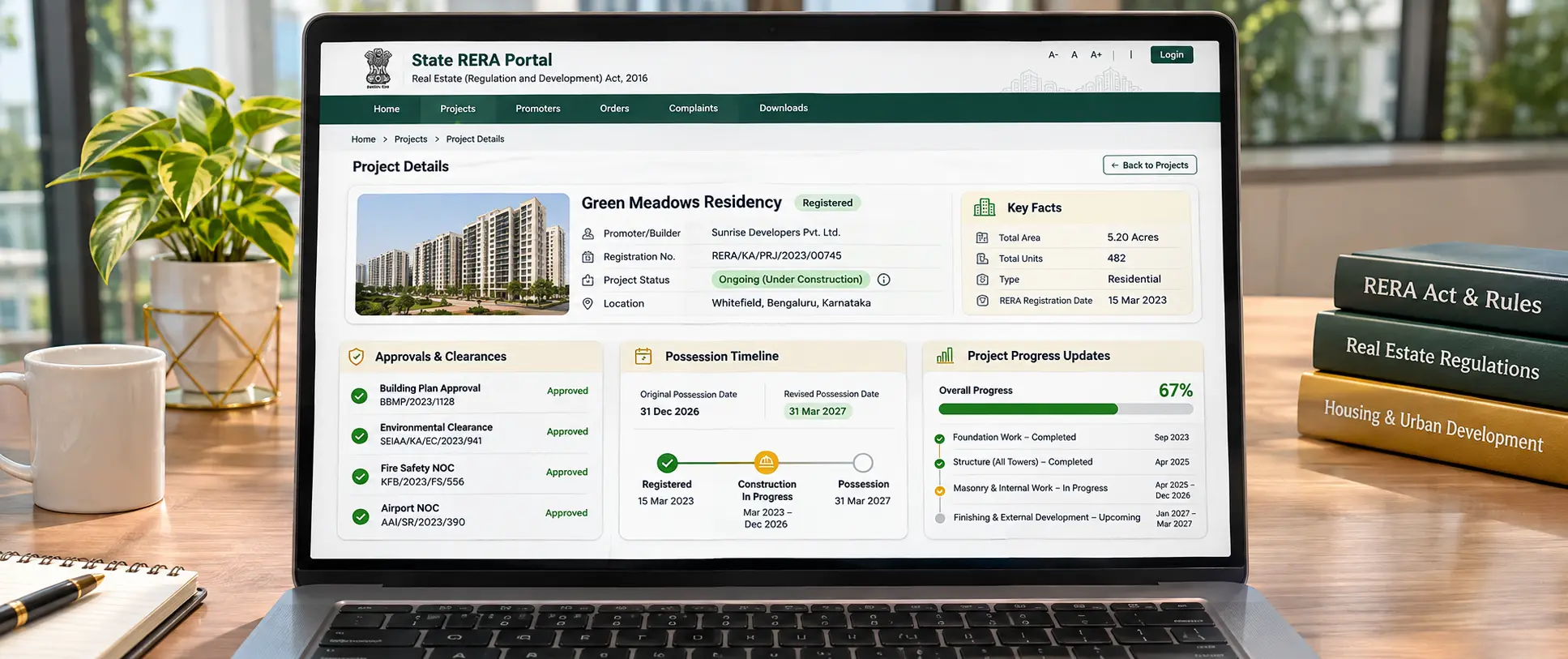
When the project page opens, read it slowly. Check that the project name, builder name and location match exactly what the sales team told you. Even a small spelling difference can mean the number belongs to another project.
Step 5: Check That the Registration Is Valid
Every registration has a start date and an end date. Make sure it is active and has not expired or been cancelled. If the end date is close, look for an extension order on the same page.
Step 6: Download and Save the Certificate
Most portals let you download the registration certificate as a PDF. Save it on your phone and keep a printout. You may need it later if you file a complaint.
RERA is only one part of your homework. For the other papers, see our guide on how to verify documents before buying a flat.
What to Look for on the Project Page
The project page holds many useful facts, so do not rush past it.
Builder and Project Details
Check the promoter’s name, address and past projects. A clean record of delivered projects is a good sign. Also see whether any court cases or complaints are listed against the builder.
Land and Approvals
See whether the land title, sanction plan and environment clearance are listed. These papers show that the builder has the right to build on that land. If an approval is missing or marked pending, ask the builder for a written reason.
Timeline and Completion Date
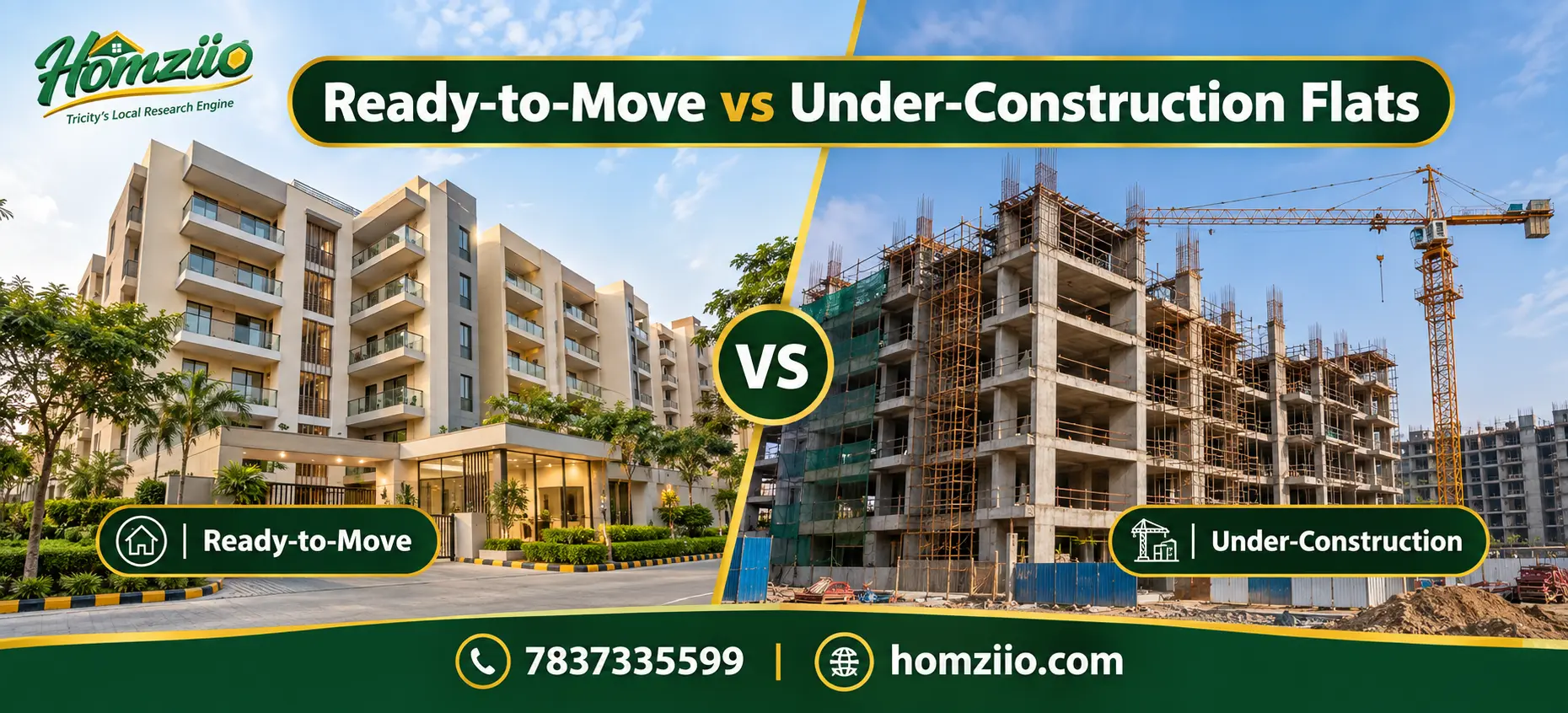
Note the promised possession date. The builder is legally bound to follow it. This date also tells you what kind of home you are looking at. Not sure whether to choose ready-to-move flats or under-construction projects? Our comparison of ready vs under-construction flats explains the difference in price, risk and possession time.
Quarterly Progress Reports
Builders must upload regular updates on the work done at the site. These show how much construction is complete and how much money has been used. If the updates show very slow progress, you will know early that trouble may be coming.
Compare the reports with the real site by visiting it yourself. What is on paper should match what you see.
Bank Account Details
The page often shows the bank account meant for the project. Make payments only to this account. Never pay into a personal account of an agent or salesperson.
How to Check Whether a Real Estate Agent Is Registered
Agents must also register under the Act. Before you work with an agent, search for the name on the same state portal. Look for a section called Registered Agents and enter the name or registration number. If the agent is not listed, think twice before trusting that person with your money.
Warning Signs You Should Never Ignore
Some projects look perfect, but small signs tell a different story. Watch for these red flags.
- The builder refuses to share the RERA number. A genuine builder shares it easily. Be careful if you hear “it is in process” or “it is not needed”.
- The number matches no project. If the portal shows no result or a different project, double check the number and ask the builder for a clear answer.
- The registration has expired or been revoked. The builder is no longer allowed to sell flats freely. Do not pay any booking amount.
- You are pushed to pay quickly. Be careful if someone says the offer ends today or only two flats are left. A good project can wait while you do your homework.
- A large payment is asked for without a written agreement. A builder cannot take more than 10 percent of the price as advance without first signing a registered agreement for sale. If someone asks for more, say no politely and ask for the agreement. Have a trusted lawyer read it before you sign.
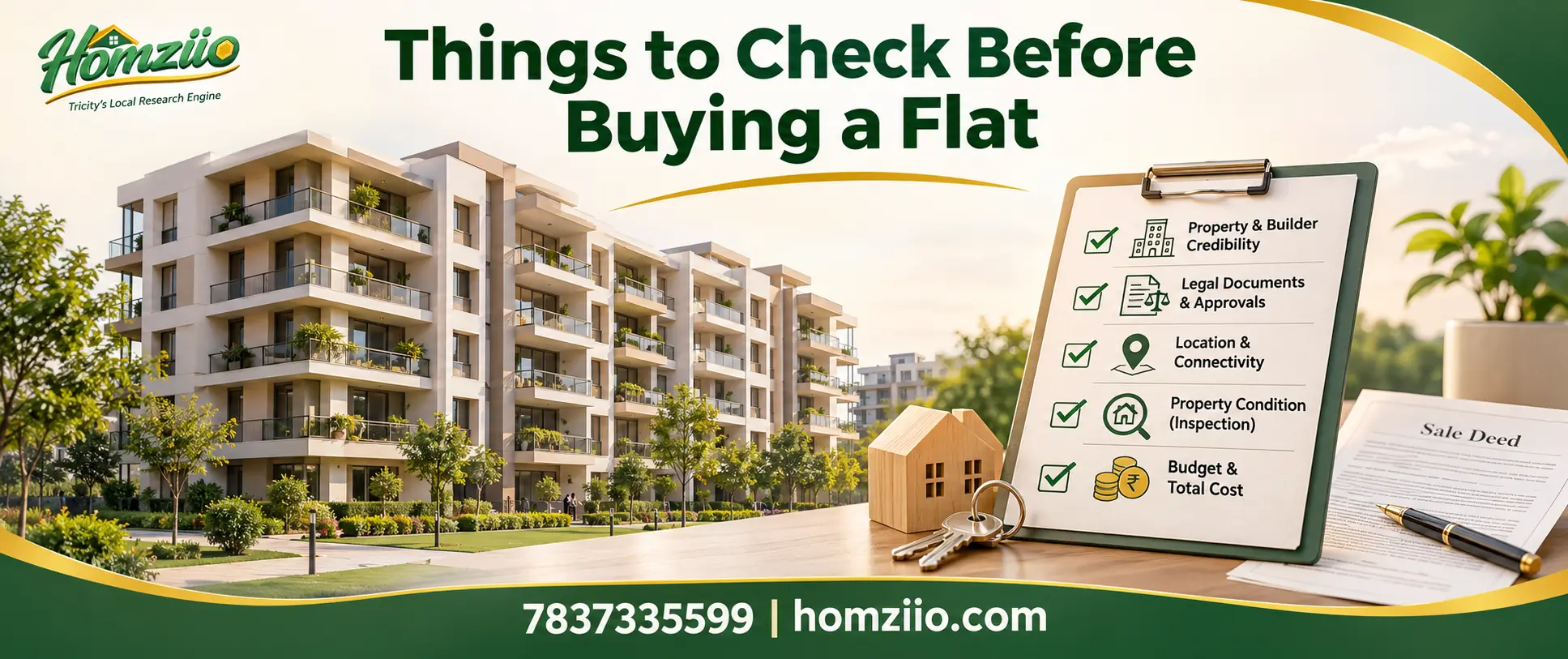
For a fuller list of red flags, read things to check before buying a flat.
What If the Project Is Not Registered?
If a project needs registration but does not have it, the safest choice is to avoid buying. You lose many legal protections and your money is at greater risk.
You can also report the project to the state RERA authority. Many portals allow this online, and your complaint may save other buyers from the same trap.
Your Rights After Buying a RERA-Registered Flat
- Right to information: You can see the project details and approved plans at any time.
- Right to timely possession: The builder must hand over the flat on the promised date.
- Right to refund or compensation: If the builder fails, you can ask for your money back with interest.
- Right to fix defects: If a structural defect appears within five years of possession, the builder must repair it at no extra charge.
- Right to complain: You can file a complaint with the state RERA authority for a small fee.
Common Mistakes Buyers Make
Many people check the number but still make small errors.
- Looking only at the number and not reading the project details
- Trusting a certificate photo sent on WhatsApp instead of the live portal
- Forgetting to check the validity date
- Not matching the builder’s name
Always verify everything yourself on the official website. If you want a second pair of eyes, try our free RERA verification assistance.
Quick Checklist
- Ask the builder for the RERA number
- Open your state’s official RERA website
- Search the project and match all names
- Check that the registration is active
- Read the approvals and timeline
- Save the certificate
- Pay only to the project bank account
Conclusion
Checking RERA registration before buying a flat is free, takes only a few minutes and protects the biggest purchase of your life. Find the RERA number, verify it on your state’s official portal, match every detail and confirm that the registration is active before you pay.
If you are planning to buy, take the RERA number of your shortlisted project and search it today. Need help? Use our free RERA verification assistance or browse RERA approved projects in Mohali and Zirakpur to begin your search.
New Projects in Chandigarh
View all projects in Chandigarh →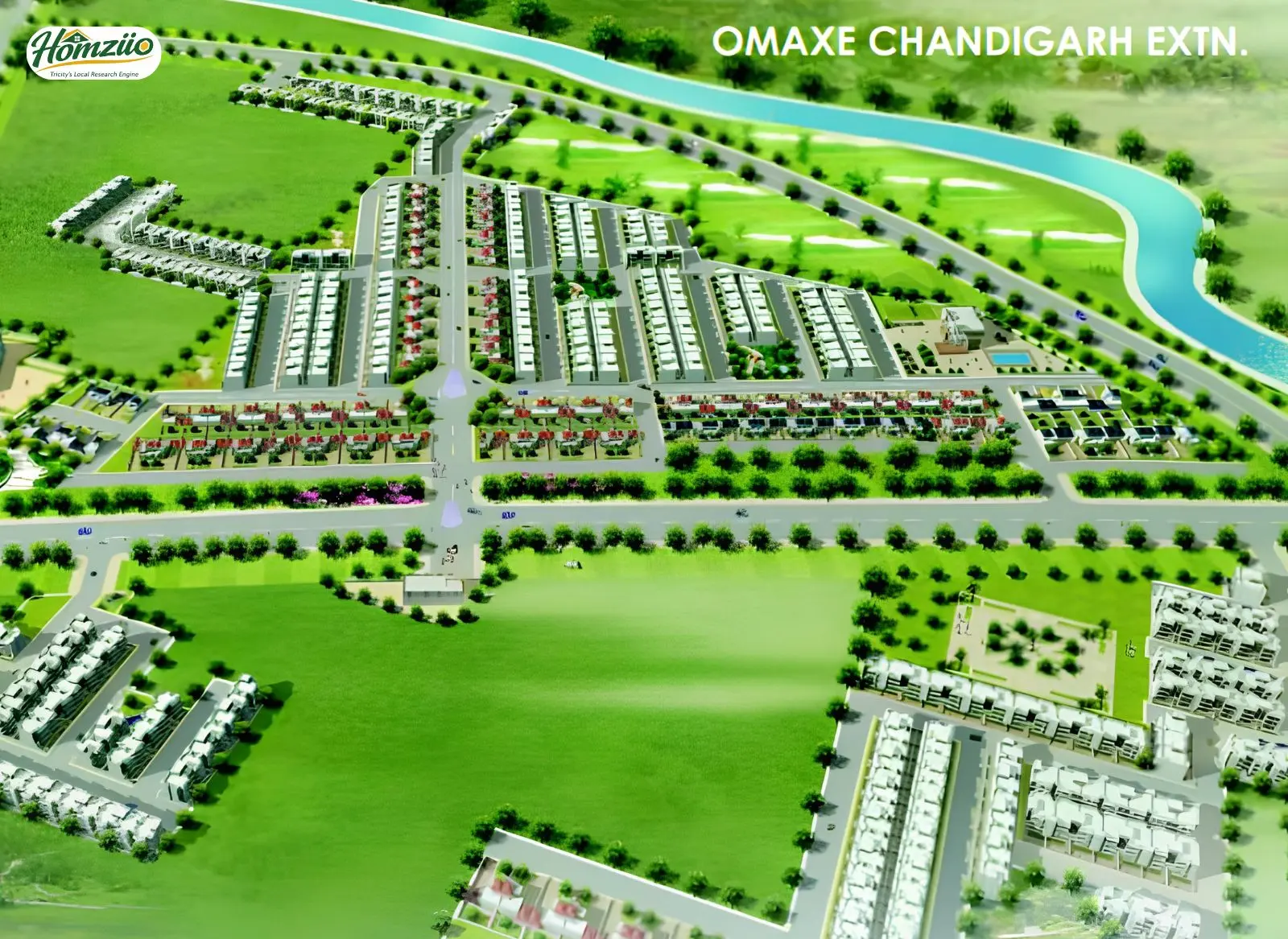







Rozen Singgla is a real estate analyst and co-founder of Homziio, specialising in the Chandigarh Tricity property market. With deep expertise in RERA-verified residential and commercial projects across Mohali, Zirakpur, Kharar, and Panchkula, Rozen helps buyers and investors make informed decisions backed by verified data and on-ground market insights.
News insight
 Nov 02, 2026
Things to Check Before Buying a Flat: A Simple Guide for Homebuyers
A simple homebuyer checklist covering RERA, legal papers, location, flat condition, hidden costs, ho...
 Oct 06, 2026
Ready-to-Move vs Under-Construction Flats in Tricity: Mohali, Zirakpur, Kharar, New Chandigarh & Panchkula
Ready-to-move vs under-construction flats: which one suits you? A ready flat gives quick possession,...
 Sep 15, 2026
Real Estate in Kharar Guide 2026: Complete Buyer's Handbook
Discover why real estate in Kharar is booming in 2026 verified prices, RERA-approved projects, top i...