
Mohali Real Estate Guide: Localities, Prices & New Projects
The complete guide to Mohali's sectors, corridors and connectivity — from the PCA Stadium and IT City to Aerocity and the airport belt — plus 194+ new projects and 67+ resale & rental listings across the city.
Quick Facts About Mohali
| Official Name | Sahibzada Ajit Singh Nagar (SAS Nagar) |
|---|---|
| Common Name | Mohali |
| State | Punjab, India |
| Founded | 1 November 1975 (foundation stone laid by Giani Zail Singh) |
| District Formed | 14 April 2006 (18th district of Punjab) |
| Development Authority | GMADA (Greater Mohali Area Development Authority), constituted 14 August 2006 |
| Population (2011 Census) | 176,152 (city) |
| Area | Approx. 176 sq. km (city limits) |
| Elevation | 316 metres above sea level |
| Languages | Punjabi (official), Hindi, English, Puadhi |
| Known For | Planned sector layout, PCA Cricket Stadium, IISER Mohali, IT and pharma industry |
About Mohali
Mohali — officially S.A.S. Nagar — is the planned twin city bordering Chandigarh to the west, laid out across GMADA's grid of numbered sectors and phases. It's anchored by landmarks like the Punjab Cricket Association (PCA) Stadium in Sector 63, IT City in Sector 82–83, and Chandigarh International Airport just 10 km away along the Airport Road corridor.
The city splits into a few distinct pockets: the established Sector 61–71 belt closest to the Chandigarh border, the newer high-rise corridor spanning Sector 88–127 and Aerocity near the airport, and the Kharar Road / Sohana belt running out toward Landran and Kurali. Sector 70's club road and Sector 66A are the current premium addresses, while Sunny Enclave and Kharar Road remain the go-to pockets for first-time buyers.
Fortis Hospital (Sector 62) and Max Super Speciality (Phase 6) anchor healthcare, ISBT-43 on Sohana Road handles intercity buses, and GMADA's sector-by-sector planning means wide roads, underground utilities and dedicated green belts most North Indian cities don't have.
IT professionals working out of Quark City and the Sector 82–83 IT Park drive much of the housing demand here, alongside investors targeting the Aerocity–airport rental corridor. Every listing on Homziio is RERA-verified — check pbrera.in for any project's registration before booking.
Mohali's History and the Story Behind Its Name
Where the name "Mohali" comes from
The name comes from Mohali village, which stood on this land before the township was built. When the town was formally founded, it was given the official name Sahibzada Ajit Singh Nagar (S.A.S. Nagar), honouring Sahibzada Ajit Singh — the eldest son of Guru Gobind Singh, the tenth Sikh Guru. S.A.S. Nagar remains the official name used in government records and court documents, while "Mohali" stays the name in everyday use, on maps and in common conversation.
From farmland to satellite city
Before development began, this was largely agricultural land on the outskirts of Chandigarh — India's first fully planned city, designed in the 1950s by Le Corbusier. As Chandigarh's population outgrew its boundaries through the 1960s, the Punjab government looked to adjoining land to build a satellite township that could absorb the overflow.
The foundation stone was laid on 1 November 1975 by then Punjab Chief Minister Giani Zail Singh, and the town was named Sahibzada Ajit Singh Nagar. Development proceeded sector by sector through the late 1970s, '80s and '90s — the earliest sectors are still known locally as "Phases" (Phase 1 to Phase 11) rather than by sector number, a naming convention that survives today.
On 14 April 2006, S.A.S. Nagar was carved out as Punjab's 18th district, bringing Mohali, Kharar and Dera Bassi together under one administrative umbrella. Today Mohali and Chandigarh form a single contiguous urban area, separated only by the state/UT boundary — you can walk from a Chandigarh sector into a Mohali phase without any visible change in the streetscape.
City Planning and GMADA
Is Mohali really a planned city?
Yes — Mohali continues the planning philosophy of neighbouring Chandigarh. The town is divided into self-contained sectors, each intended to function as a largely self-sufficient neighbourhood with its own markets, schools and green spaces, connected by a hierarchy of roads (arterial V1/V2 down to internal V6/V7 lanes) that mirrors Chandigarh's own road classification.
Responsibility for planning sits with the Greater Mohali Area Development Authority (GMADA), constituted on 14 August 2006 to plan the wider region in an integrated way rather than town by town. GMADA's jurisdiction extends beyond Mohali itself to Zirakpur, Kharar, Dera Bassi, Banur and New Chandigarh (Mullanpur), and it's responsible for sector-level infrastructure, plot auctions and regulating private development under Punjab's town planning laws.
GMADA has conceived several of the townships that now define Mohali's skyline: Aerocity, a large master-planned zone near the airport; Aerotropolis, a newer and larger expansion toward Banur and Dera Bassi; Eco City, lower-density green sectors toward New Chandigarh; Education City, a cluster of sectors set aside specifically for schools, colleges and universities; dedicated IT City and Medicity zones for technology and healthcare investment; and New Chandigarh (Mullanpur), GMADA's most ambitious long-term project, with its own international cricket stadium and institutional campuses.
Administration and Governance
Mohali is the headquarters of SAS Nagar district, one of Punjab's 23 districts, and is administered at two levels. At the district level, a Deputy Commissioner — an officer of the Indian Administrative Service — heads civil administration, overseeing law and order, revenue matters and coordination between government departments across Mohali, Kharar and Dera Bassi tehsils. At the municipal level, civic services within Mohali town — roads, sanitation, water supply and local planning within municipal limits — are administered by the Mohali Municipal Corporation, headed by an elected Mayor and municipal councillors.
GMADA overlaps with both bodies, continuing to play a central role in land-use planning, infrastructure and construction regulation across the wider Greater Mohali region — so anyone building or buying property here typically deals with GMADA's building and town-planning wings alongside the municipal corporation. Judicial administration runs through the District Courts complex in Sector 76, under the Punjab and Haryana High Court's jurisdiction.
Geography, Climate and Location
Mohali sits in the north-eastern part of Punjab, in the sub-Himalayan plains close to where they meet the lower Shivalik hills, at roughly 30.7°N, 76.7°E and an elevation of about 316 metres above sea level. The Ghaggar and Patiala-ki-Rao seasonal streams pass through parts of the wider district, and the terrain that once had ravines and swampy low-lying patches — the same ground later reshaped to build the PCA Stadium — has largely been levelled through decades of planned development.
Mohali shares Chandigarh's plains climate: hot, humid summers (April–June, often above 40°C), a monsoon season (July–September) with heavy rainfall, and cold, foggy winters (November–February). The Shivalik hill stations nearby, such as Kasauli, offer a cooler contrast — mild summers (15–30°C) and colder, sometimes frosty winters — and are a common weekend escape for Mohali and Tricity residents.
Demographics
According to the 2011 Census of India, Mohali city had a population of approximately 176,152 across a municipal area of about 176 sq. km — roughly 1,000 people per sq. km. The town has historically recorded a literacy rate well above the national average, consistent with its identity as an educated, service-sector-driven urban centre rather than a traditional industrial town.
Since 2011, the population has grown considerably, driven by migration for IT, education and healthcare jobs and by the town's continued horizontal expansion into new GMADA sectors and townships. Punjabi is the predominant language, with Hindi and English widely used in business and administration, and the local Puadhi dialect spoken in parts of the wider district.
Popular Localities in Mohali
Explore new projects in Mohali's most active micro-markets.
Explore Mohali Properties by Type
Economy, IT and Careers in Mohali
Mohali's economy has shifted decisively from its 1970s manufacturing roots — early tenants included Punjab Tractors and ICI Paints — toward information technology and IT-enabled services. Quark City, a private tech park built by the US software company Quark, was the most visible early driver of this shift, and a wave of IT, electronics and pharmaceutical companies followed through the 1990s and 2000s. GMADA's dedicated IT City zone (spanning Sectors 66-B, 82-A, 83-A and 101-A along Airport Road) and the adjoining Rajiv Gandhi Chandigarh Technology Park have reinforced Mohali–Chandigarh's identity as a growing North Indian tech hub, with delivery centres and Global Capability Centres for firms including Infosys and Tech Mahindra, alongside a cluster of homegrown software and product companies.
Beyond IT, Mohali has a notable pharmaceutical and life-sciences cluster anchored by NIPER (National Institute of Pharmaceutical Education and Research), and a large BPO/customer-experience workforce through employers like Teleperformance and TaskUs, both of which run large Mohali facilities across voice, chat, technical-support and content-moderation roles and are among the town's biggest employers of fresh graduates. This employment base is a direct driver of Mohali's residential and rental demand — professionals working in IT City, Quark City and the Aerocity corridor consistently look for housing within a short commute of these office clusters, which is why sectors near IT City and Airport Road carry a rental and appreciation premium.
Quark City
Quark City is Punjab's first and only notified IT/ITES SEZ, anchored by Landmark Plaza — a 14-storey, roughly 600,000 sq. ft. tower — with additional space at SP Infocity, developed by Shapoorji Pallonji. Tenants reported in and around the SEZ include a unit of Infosys, alongside Jorie, Maropost, Bunge, Evry and Alorica; Quark itself runs content-automation and enterprise-publishing operations from Phase 8B; and Shapoorji Pallonji Real Estate operates from Quark City as part of its wider group. A number of smaller IT/software firms, including NetSake Solutions and Emerson-affiliated units, operate out of the surrounding Sector 74/Phase 8B industrial area. (Tenant lists change over time — verify current occupancy directly before citing specific companies in marketing material.)
IT City
IT City spans Sectors 66-B, 82-A, 83-A and 101-A along Airport Road and hosts more than 80 IT firms and Global Capability Centres, including an Infosys delivery centre on IT City Road (Sector 83A), a Tech Mahindra digital-transformation delivery centre, and mid-sized firms such as MoogleLabs (AI/ML, blockchain, DevOps and data science, Alpha IT City Sector 83), ToXSL Technologies (custom software and app development) and Seasia Infotech (AI, fintech and cloud). As more GCCs set up here, residential demand in the neighbouring sectors continues to track the pace of office leasing.
Real Estate and Construction
Real estate is another major pillar of Mohali's economy, a direct consequence of GMADA's continuous rollout of new residential and commercial sectors. Retail and hospitality have grown alongside it — malls, multiplexes, hotels and restaurants now serve both residents and the visitors drawn in by cricket matches, conferences and business travel connected to Chandigarh. Landmark commercial developments like CP 67 and HLP Galleria (see Malls & Culture below) have themselves become drivers of nearby residential demand.
Established builders continue launching premium projects across the city — including Homeland Heights (Sector 70), EVOQ Antalia (Sector 66) and Marbella Grand (Sector 82A) — offering modern amenities and strong appreciation potential. This sustained pipeline of new launches has reinforced Mohali's reputation as a preferred investment destination in the Tricity region.
Education in Mohali
Education has been a consistent strength of Mohali since its early years, and the town now hosts a dense cluster of schools and research institutions relative to its size. IISER Mohali (Indian Institute of Science Education and Research), located in Knowledge City, Sector 81, is an autonomous public research institute and one of India's Institutes of National Importance, offering an integrated BS-MS program alongside PhD research across the sciences. ISB Mohali, the Punjab campus of the Indian School of Business, has operated here since 2012 and is one of the few business schools globally to hold triple accreditation (AACSB, AMBA, EQUIS).
The district is also home to Chandigarh University's large campus at Gharuan and the Chandigarh Group of Colleges around Landran and Jhanjeri, along with C-DAC, a regional Punjabi University centre, and the Army Institute of Law in Sector 68. Together with Chandigarh, this concentration of institutions makes Mohali one of North India's leading education destinations, drawing students from across Punjab, Himachal Pradesh and Jammu & Kashmir — and, in turn, sustaining steady rental demand near these campuses.
Healthcare in Mohali
Mohali's healthcare infrastructure has grown alongside its population and is now one of the leading medical hubs of the Tricity region. Fortis Hospital (Sector 62) and Max Super Speciality Hospital anchor multi-speciality care including cardiac sciences, oncology and transplant programmes, while Livasa Hospital (Sector 71, formerly Ivy Hospital) and Sohana Hospital (Sector 77) add further NABH-accredited tertiary care capacity, including robotic surgery. Nearby, PGIMER in Chandigarh is one of India's premier referral institutes for the wider Punjab, Haryana and Himachal Pradesh region.
GMADA's designated "Medicity" zone reflects a deliberate effort to expand this cluster further, positioning Mohali as a medical-tourism and tertiary-care destination. For homebuyers, proximity to this healthcare corridor — particularly around Sector 62 and Sector 71 — is a recurring factor in locality preference, especially for families and senior buyers.
Sports: Home of the PCA Stadium
Few towns Mohali's size carry as strong a sporting identity, thanks almost entirely to the Punjab Cricket Association (PCA) Stadium — officially the I.S. Bindra PCA Stadium — in Sector 63. Built on what was previously swampland, construction began in 1990 and the ground was inaugurated on 22 November 1993 with an India–South Africa ODI during the Hero Cup. It went on to host its first Test in December 1994, a memorable 1996 World Cup semi-final, and matches across multiple World Cups and IPL seasons as home ground of Punjab Kings.
Punjab's cricketing infrastructure has since expanded with the Maharaja Yadavindra Singh International Cricket Stadium in New Chandigarh (Mullanpur), opened in 2021 with a capacity of roughly 38,000 — built to complement, not replace, the historic Sector 63 ground. Beyond cricket, GMADA and the Punjab government have developed facilities for hockey, football, athletics, badminton and swimming across the town.
Malls, Culture and Leisure
As Mohali's population and incomes have grown, so has its entertainment infrastructure. CP 67, on International Airport Road in Sector 67, is a premium mixed-use development by Homeland Group with Unity Group — high-street retail, office space, a PVR multiplex, food courts and serviced apartments. Mohali Walk, in Sector 62, Phase 8, offers Shoppers Stop and DMart alongside a 7-screen PVR INOX multiplex with 4D screens. HLP Galleria, also in Sector 62 Phase 8 and spread over 6.69 acres, carries brands including Shoppers Stop, an exclusive OnePlus store, Swarovski, Starbucks (drive-through), Daryaganj, Haldiram's and a 5-screen PVR INOX.
Culturally, Mohali carries a strong Sikh and Punjabi character. Gurudwara Amb Sahib (Sector 62) marks a site where Guru Gobind Singh Ji is believed to have rested under an Amaltas (Amb) tree, and draws thousands of daily visitors for prayers and langar. Gurudwara Sahib Sohana, in Sohana village, is another historic shrine associated with Guru Gobind Singh Ji's visit to the region. An ISKCON Temple dedicated to Lord Krishna also serves the town's devotional community.
Tourist Spots and Evening Hotspots in Mohali
Public green spaces such as Silvi's Park and Bougainvillea Park continue the Chandigarh-style planning tradition, alongside the landscaped Rose Garden of Sohana and the Chandigarh Horse Riding Club within Mohali's sector grid. On the outskirts, the Sukhna Wildlife Sanctuary and the Fateh Burj monument at Chappar Chiri — built to commemorate the eighteenth-century Battle of Chappar Chiri and Banda Singh Bahadur's victory — add heritage and nature options within easy reach of town.
For evenings out, 3B2 Market is one of Mohali's busiest destinations, with food stalls, cafés and dessert outlets drawing students and young professionals; Jubilee Walk offers cafés, restaurants and lounges with illuminated walkways; Sector 82 has become the town's café hub, with rooftop dining and live-music spots; The Brew Bros is a well-known nightlife venue for craft beverages and live music; Bestech Square Mall combines dining, entertainment and shopping; and The Burj is a premium rooftop destination known for its skyline views. On the family/day-trip side, Thunder Zone offers rides and a water park near Chandigarh, and Siswan Dam is a quieter spot for picnics and nature walks in the nearby hills, with a few local eateries around it that are worth booking ahead for on weekends.
Hotels in Mohali
Oberoi Sukhvilas Spa Resort, set in the Siswan Forest near Chandigarh, is a luxury retreat known for private-pool villas and a full spa programme — geared toward wellness retreats and getaways rather than business travel. Welcomhotel by ITC Hotels, near CP 67 Mall, is Mohali's leading business-and-leisure property, with banquet space, a spa and pool, and a location that's kept it a preferred stay for visiting cricket teams during IPL matches at the PCA Stadium.
Connectivity and Infrastructure
How well-connected is Mohali to Chandigarh and the airport?
Very well. Chandigarh International Airport sits inside Mohali's own sector grid, a short drive from the core sectors via Airport Road/PR-7. Mohali railway station and the wider Chandigarh rail network connect the town to the national grid, while national and state highways run outward toward Ludhiana, Patiala, Ambala and Himachal Pradesh. ISBT-43 on Sohana Road handles intercity bus traffic across the Tricity.
PR-7 (Peripheral Road 7) is the corridor's single most important artery, linking Mohali's developing sectors to the airport, Aerocity and major highways — its build-out has directly driven real estate and commercial activity along its length. Longer-term, the national Bharatmala highway programme includes corridors passing near Mohali that are expected to further improve connectivity to Haryana and Himachal Pradesh, and regional planning bodies continue to discuss expanded metro/rapid-transit links across the Tricity.
Featured Projects in Mohali

Mohali, Punjab
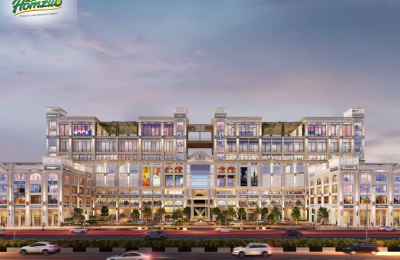
Downtown Mohali by Icon Group is a four-sided commercial plaza on a corner 5.1 acre site in Sector 62, Phase 8...

Mohali, Punjab
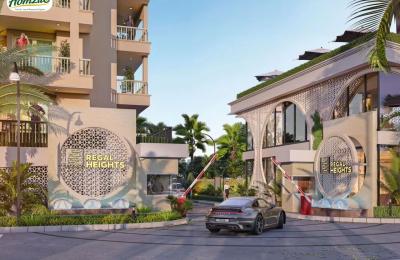
Regal Empirus by GDPL is a premium residential project in Sector 91, Mohali. Spread on 5.37 acres, it offers u...

Mohali, Punjab


Mohali, Punjab
Mohali, Punjab
₹82lakh - ₹1.65crore


Mohali, Punjab

Mohali, Punjab
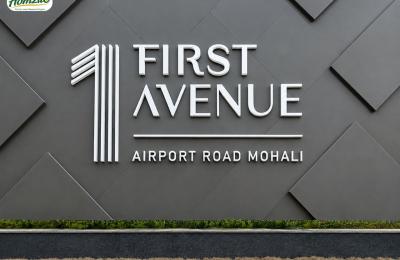
First Avenue by GB Realty is a premium 6-acre residential landmark located on PR7 Airport Road, Aerocity, Moha...

Mohali, Punjab
₹86,000/sqft
Notable Sectors and Neighbourhoods
Mohali's identity is tied closely to its sector layout, and different parts of the town have developed distinct characters over five decades. The early Phases 1–11, built from the 1970s through the 1990s, remain the most established residential areas — mature trees, independent houses and a settled, low-rise feel similar to Chandigarh's older sectors. Sector 70 and Sector 71 have grown into busy commercial-residential hubs with markets and mid-rise apartments, while Sector 62 is closely associated with healthcare (Fortis Hospital) and Sector 63 with the PCA Stadium. Knowledge City in Sector 81 is the town's premier institutional address, home to IISER, ISB and allied research bodies within a single planned precinct.
Further out, the newer GMADA townships — Aerocity, Aerotropolis, Eco City and the sectors approaching New Chandigarh (Mullanpur) — represent the current frontier of growth: wider roads, larger plots and lower-density development compared to the older core. This gives Mohali a visible growth-ring structure — old Phases at the centre, mid-generation sectors in between, and new GMADA townships at the periphery — with each ring reflecting the planning priorities of the decade it was built in.
Civic Life and Media
As Mohali has grown from township to district headquarters, its civic and media landscape has matured with it. The town carries editions and bureaus of major Punjabi, Hindi and English newspapers covering the wider Tricity, and is headquarters to titles including The Tribune, Daily Post and Ajeet Samachar. The Punjab School Education Board's head office sits in Phase 9, PUDA Bhawan and the GMADA office are in Sector 62, and the Punjab Subordinate Service Selection Board (PSSSB) head office is in Sector 68.
Resident welfare associations are active across most sectors, engaging with the Municipal Corporation and GMADA on road maintenance, park upkeep, water supply and waste management. Religious and cultural life is anchored by the town's gurdwaras, temples and community halls, and residents have easy access to the wider Tricity's museums and performance venues, including Chandigarh's Rock Garden and Sukhna Lake, both a short drive away.
Looking Ahead
More than fifty years after Giani Zail Singh laid its foundation stone, Mohali continues to expand outward. GMADA's ongoing projects — the continued build-out of Aerocity and Aerotropolis, the New Chandigarh township at Mullanpur, and the Eco City sectors — point to a town still very much in the process of becoming, even as its established sectors have settled into mature, leafy neighbourhoods. Planned infrastructure, a strong education and research base anchored by IISER and ISB, a growing healthcare sector, an established IT and pharmaceutical industry, and a sporting identity built around the PCA Stadium together give Mohali a character distinct among India's satellite cities — neither a purely dormitory town for Chandigarh nor a fully independent metropolis, but something in between, with an identity increasingly its own.
Mohali: Emerging as North India's Next Gurugram
Mohali is writing a growth story that echoes Gurugram's in more ways than one. Just as Gurugram transformed from a quiet job hub near Delhi into India's most sought-after real estate destination, Mohali is following a similar trajectory — anchored by its own booming IT ecosystem at Quark City and IT City, which has drawn global capability centres and a growing base of software and services firms, and pulls thousands of skilled professionals into the region every year.
That employment growth is translating directly into real estate momentum, much as it did in Gurugram: established builders are launching premium residential and commercial projects across Mohali, Kharar, Zirakpur and New Chandigarh, backed by improving infrastructure, wider highways and better connectivity to Chandigarh. Property values in corridors like Sector 66A, Sector 70 and Aerocity have climbed accordingly. What took Gurugram over a decade to build, Mohali appears to be compressing into a shorter window — making it, on current momentum, one of the Tricity's most promising real estate destinations, with career growth and property appreciation moving hand in hand.
General FAQ About Mohali
- What is the official name of Mohali?
Mohali's official administrative name is Sahibzada Ajit Singh Nagar, commonly abbreviated as SAS Nagar, named after Sahibzada Ajit Singh, the eldest son of Guru Gobind Singh.
- When was Mohali founded?
The foundation stone of Mohali township was laid on 1 November 1975 by the then Punjab Chief Minister, Giani Zail Singh.
- When did Mohali become a separate district of Punjab?
Mohali (SAS Nagar) was carved out as the eighteenth district of Punjab on 14 April 2006, formed from parts of the former Ropar and Patiala districts.
- What is GMADA and what does it do?
GMADA, the Greater Mohali Area Development Authority, is the Punjab government body responsible for planning and developing Mohali and the surrounding region, including Zirakpur, Kharar, Dera Bassi and New Chandigarh. It was constituted on 14 August 2006 and oversees land acquisition, infrastructure development and major townships such as Aerocity, Eco City and IT City.
- Why is Mohali's layout similar to Chandigarh's?
Mohali was deliberately planned as an extension of Chandigarh's sector-based grid design, using similarly sized rectangular sectors, to maintain continuity with Chandigarh's internationally recognised planning model.
- What is Mohali best known for in sports?
Mohali is best known for the I.S. Bindra Punjab Cricket Association Stadium in Sector 63, one of India's leading international cricket venues, inaugurated in 1993 and host to World Cup matches, Test cricket and IPL fixtures over the decades.
- What are the major educational institutions in Mohali?
Mohali is home to IISER Mohali, the Indian School of Business (ISB), the National Institute of Pharmaceutical Education and Research (NIPER), Chandigarh University and the Chandigarh Group of Colleges, among many other schools and institutes.
- Which are the leading hospitals in Mohali?
Fortis Hospital and Max Super Speciality Hospital are among Mohali's leading private healthcare providers, alongside Livasa and Sohana Hospital and several other multi-speciality centres, supported by proximity to PGIMER Chandigarh.
- What industries drive Mohali's economy?
Mohali's economy is driven primarily by information technology and IT-enabled services, pharmaceuticals and life sciences, healthcare, education, real estate, and retail and hospitality.
- How is Mohali connected to the rest of India?
Mohali is served by Chandigarh International Airport, Mohali and Chandigarh railway stations, and national and state highways connecting it to Ludhiana, Patiala, Ambala, Himachal Pradesh and the wider National Capital Region.